Arts Universe and Philology

Arts Universe and Philology
The blog "Art, Universe, and Philology" is an online platform dedicated to the promotion and exploration of art, science, and philology. Its owner, Konstantinos Vakouftsis, shares his thoughts, analyses, and passion for culture, the universe, and literature with his readers.

Τετάρτη 30 Οκτωβρίου 2013

Σπάνια «υβριδική» ηλιακή έκλειψη. Rare ‘Hybrid’ Solar Eclipse on November 3, 2013: How to See It

A partially eclipsed setting Sun as seen from Dallas, Texas on May 20th, 2012. This weekend’s eclipse will offer U.S. East Coast residents a similar sunrise view. Credit: Jason Major/Lights in the Dark.

Η μέρα για την τελευταία έκλειψη του 2013 πλησιάζει. Στις 3 Νοεμβρίου θα γίνουμε μάρτυρες της πέμπτης συνολικά έκλειψης για φέτος και της δεύτερης ηλιακής έκλειψης του έτους.

An animation of the path of the November 3rd hybrid solar eclipse. Credit: NASA/Goddard Space Flight Center.

Αυτή όμως η έκλειψη έχει κάτι το διαφορετικό: χαρακτηρίζεται ως σπάνια και υβριδική γιατί θα είναι δακτυλιοειδής τα πρώτα 15 δευτερόλεπτα της τροχιάς της και στην πορεία θα μεταμορφωθεί σε ολική καθώς η σκιά της Σελήνης θα περάσει πολύ κοντά στη Γη και θα καλύψει το δίσκο του Ήλιου κατά μήκος του υπόλοιπου της τροχιάς της.

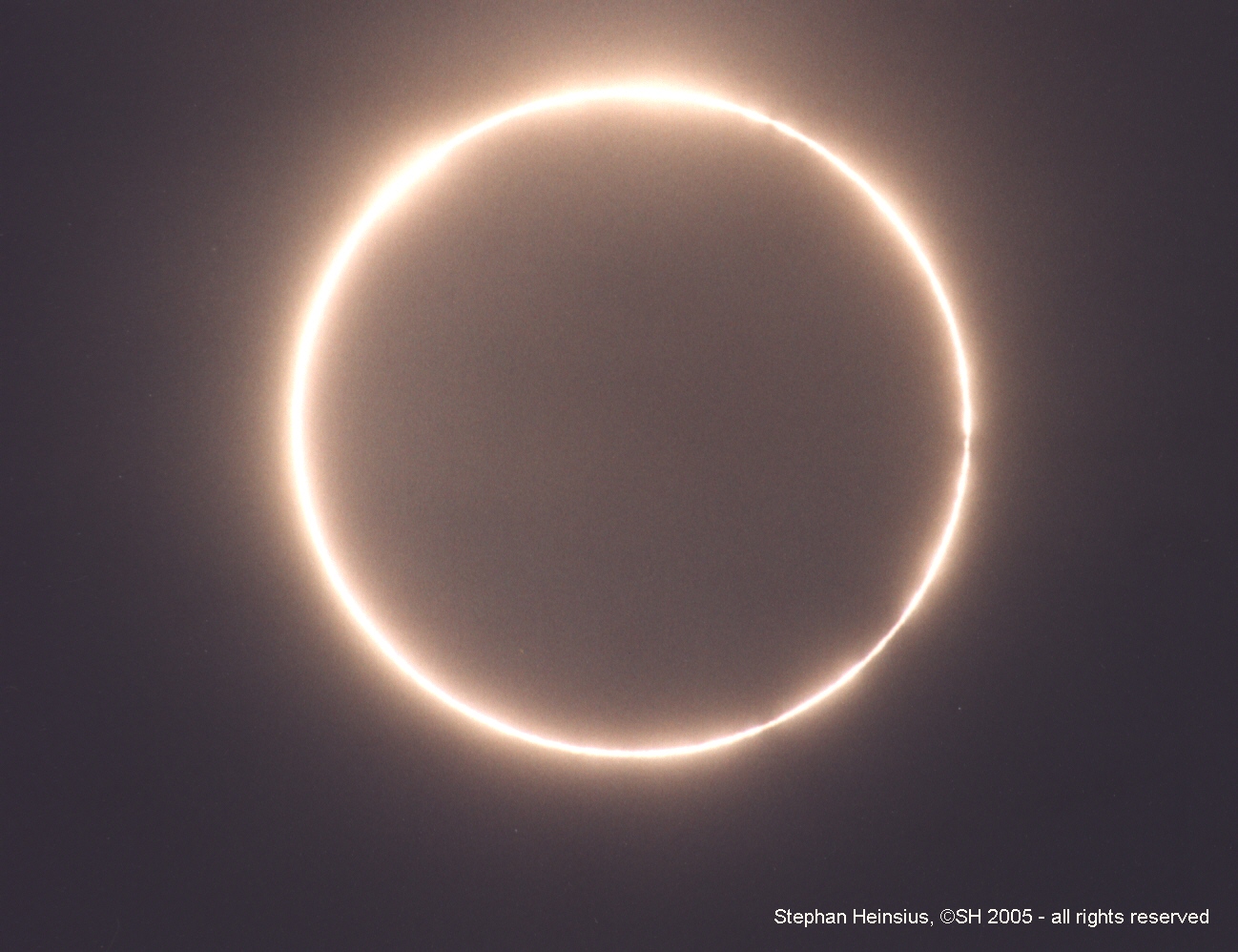
A spectacular geocentric celestial event of 2005 was a rare hybrid eclipse of the Sun - a total or an annular eclipse could be seen depending on the observer's location. For Fred Espenak, aboard a gently swaying ship within the middle of the Moon's shadow track about 2,200 kilometers west of the Galapagos, the eclipse was total, the lunar silhouette exactly covering the bright solar disk for a few brief moments. His camera captured a picture of totality revealing the extensive solar corona and prominences rising above the Sun's edge. But for Stephan Heinsius, near the end of the shadow track at Penonome Airfield, Panama, the Moon's apparent size had shrunk enough to create an annular eclipse, showing a complete annulus of the Sun's bright disk as a dramatic ring of fire. Pictures from the two locations are compared above. How rare is such a hybrid eclipse? Calculations show that during the 21st century just 3.1% (7 out of 224) of solar eclipses are hybrid while hybrids comprise about 5% of all solar eclipses over the period 2000 BC to AD 3000. Today's hybrid solar eclipse is most widely visible beyond the central shadow track as a brief partial eclipse from northeastern Americas through Africa, and along the track in an annular phase for only the first 15 seconds. Image Credit & Copyright: Left: Fred Espenak - Right: Stephan Heinsius

Πόσο σπάνια όμως είναι μία υβριδική ηλιακή έκλειψη; Σε διάστημα 5.000 χρόνων (από το 1999 π.Χ. έως το 3000 μ.Χ.) και από τις συνολικά 11.898 ηλιακές εκλείψεις, μόλις οι 569 (4,8%) θεωρούνται υβριδικές.

The global path of this weekends eclipse-click to enlarge. Credit: Michael Zeiler, @EclipseMaps.

Όσοι βρεθούν στο βόρειο τμήμα της Νότιας Αμερικής και στις ανατολικές ακτές των ΗΠΑ μέχρι τις καναδικές ακτές, θα δουν μία σύντομη μερική έκλειψη, η οποία θα ολοκληρωθεί περίπου 30 δευτερόλεπτα μετά την τοπική ανατολή του ηλίου, ενώ όσοι βρεθούν στην Αφρική και τη νότια Μεσόγειο θα δουν μερικές φάσεις της έκλειψης. Οι πιο τυχεροί ωστόσο θα είναι όσοι βρεθούν στη Λιβερία και τη Γκαμπόν, όπου η ολική έκλειψη θα διαρκέσει 1 λεπτό και 7 δευτερόλεπτα.

Η συγκεκριμένη έκλειψη ανήκει στη σειρά εκλείψεων Saros 143 και αποτελεί την 23η από τις 72 εκλείψεις της σειράς. Ο κύκλος Saros είναι μία περίοδος που επαναλαμβάνεται κάθε 18 χρόνια και 11 μέρες και μπορεί να υπάρχουν πολλοί κύκλοι ταυτόχρονα στην επιφάνεια του πλανήτη μας, με κάθε μία έκλειψη να τοποθετείται σε συγκεκριμένο κύκλο, ανάλογα με το γεωγραφικό μήκος και πλάτος της. Μία σειρά Saros όμως διαρκεί συνήθως 12-15 αιώνες. Η πρώτη έκλειψη της σειράς Saros 143 σημειώθηκε στις 7 Μαρτίου 1617 και η τελευταία θα γίνει στις 23 Απριλίου 2897.


Δεν υπάρχουν σχόλια:

Δημοσίευση σχολίου