Arts Universe and Philology

Arts Universe and Philology
The blog "Art, Universe, and Philology" is an online platform dedicated to the promotion and exploration of art, science, and philology. Its owner, Konstantinos Vakouftsis, shares his thoughts, analyses, and passion for culture, the universe, and literature with his readers.

Κυριακή 11 Νοεμβρίου 2012

Σαρκοφάγος σπόγγος με εμφάνιση γλυπτού. Extraordinary harp-shaped carnivorous sponge discovered living on the Pacific Ocean floor

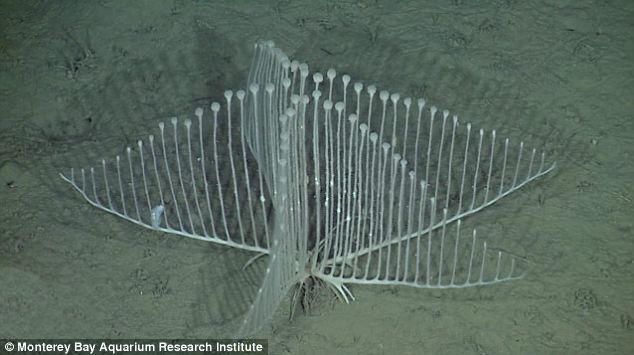
Ο σαρκοφάγος σπόγγος-λύρα θυμίζει μεταμοντέρνο γλυπτό. Weird predator: The harp sponge, or Chondrocladia lyra, so called because its strange body bears a remarkable resemblance to a harp or lyre.

Ένα είδος σπόγγου που θυμίζει γλυπτό σύγχρονης τέχνης έχει εγκαταλείψει τις διατροφικές συνήθειές της οικογένειάς του και προτιμά να τρέφεται με μικρές γαρίδες.

Ο μεταμοντέρνος «σπόγγος-λύρα» έχει οριζόντιες και κάθετες διακλαδώσεις που προεξέχουν από τον λασπώδη βυθό σαν ανάποδος πολυέλαιος. Αντί να φιλτράρει το νερό για να συγκρατήσει μικρόβια και σωματίδια οργανικών ουσιών, όπως κάνουν οι περισσότεροι σπόγγοι για να τραφούν, το νέο είδος Chondrocladia lyra παγιδεύει κωπήποδα, μικρά καρκινοειδή που θυμίζουν γαρίδες.

Τα θύματα παγιδεύονται σε μικρά αγκάθια που θυμίζουν Velcro πάνω στις κάθετες διακλαδώσεις του σφουγγαριού, και στη συνέχεια τυλίγονται μέσα σε μια μεμβράνη όπου και χωνεύονται.

Όπως αναφέρουν οι ερευνητές του Ερευνητικού Ινστιτούτου του Ενυδρείου Μόντερεϊ Μπέι στην Καλιφόρνια, ο σπόγγος-λύρα πιθανότητα ανέπτυξε αυτή την ασυνήθιστη τακτική κυνηγιού λόγω της περιορισμένης διαθέσιμης τροφής στα μεγάλα βάθη όπου ζει, από 3.300 έως 3.500 μέτρα.

In this video we describe a new species of carnivorous sponge, Chondrocladia lyra from the deep-sea off California. C. lyra is called the harp sponge because its basic structure, called a vane, is shaped like a harp or lyre. Each vane consists of a horizontal branch supporting several parallel, vertical branches. Clinging with root-like "rhizoids" to the soft, muddy sediment, the harp sponge captures tiny animals that are swept into its branches by deep-sea currents. Typically, sponges feed by straining bacteria and bits of organic material from the seawater they filter through their bodies. However, carnivorous harp sponges snare their prey—tiny crustaceans—with barbed hooks that cover the sponge's branching limbs. Once the harp sponge has its prey in its clutches, it envelops the animal in a thin membrane, and then slowly begins to digest it. The harp sponge's unusual shape and exposure to currents may also help it to reproduce more effectively. The swollen balls at the tip of the sponge's upright branches produce packets of sperm. These sperm packets are released into passing currents and are captured on the branches of other nearby sponges. The sperm then works its way from the packets into the host sponge to fertilize its eggs. As the fertilized eggs mature, these contact sites swell up, forming bulges part way up the host sponge's branches (see photo). MBARI article: http://www.mbari.org/scientists-disco... Publication reference: Lee, W. L., Reiswig, H. M., Austin, W. C. and Lundsten, L. (2012), An extraordinary new carnivorous sponge, Chondrocladia lyra, in the new subgenus Symmetrocladia (Demospongiae, Cladorhizidae), from off of northern California, USA. Invertebrate Biology. doi: 10.1111/ivb.12001

Οι διακλαδώσεις του σφουγγαριού, επισημαίνουν οι ερευνητές, δεν χρησιμεύουν μόνο ως παγίδες αλλά και ως αναπαραγωγικά όργανα: στην κορυφή τους υπάρχουν μικρές φούσκες με σπέρμα, το οποίο απελευθερώνεται στο νερό με την ελπίδα ότι θα βρει κάποιο άλλο σφουγγάρι του είδους του στην αχανή, σκοτεινή άβυσσο.

Πηγές: Lee, W.L., H.M. Reiswig, W.C. Austin, and L. Lundsten (2012). An extraordinary new carnivorous sponge, Chondrocladia lyra, in the new subgenus Symmetrocladia (Demospongiae, Cladorhizidae), from off of northern California, USA. Invertebrate Biology, 131: 259-284. doi.org/10.1111/ivb.12001 - https://www.mbari.org/news/scientists-discover-extraordinary-new-carnivorous-sponge/


Δεν υπάρχουν σχόλια:

Δημοσίευση σχολίου